
AI Infrastructure
Complete compute, memory, storage and network stacks for training, fine-tuning and serving AI models, from a single node to multi-rack deployments.
What AI infrastructure has to get right
Accelerator memory decides which models fit; memory bandwidth bounds token-generation speed; the interconnect decides how efficiently many accelerators cooperate; storage must keep data loaders and checkpointing from stalling expensive GPUs; and power and cooling decide whether the rack can run at sustained load at all. A balanced design sizes all five together rather than buying GPUs first.
Training versus inference
Training needs memory for weights, gradients, optimizer states and activations — roughly 16 bytes per parameter with mixed-precision Adam before activations — plus high-bandwidth, low-latency links for gradient synchronisation. Inference needs memory for weights and the KV cache, and is usually limited by memory bandwidth during token generation. Many organisations deploy separate training and inference pools.
Sizing method
Start from the model (parameters, precision, context length) and the service level (users, tokens per second, latency). Use the LLM and AI compute calculators to derive accelerator memory, GPU count and estimated throughput, then the power, cooling and rack tools to check that the facility can host the result.
12 products
Compare selected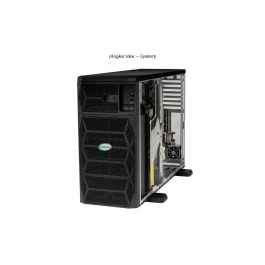
Supermicro
Supermicro Liquid Cooled GPU Super AI Station (ARS-511GD-NB-LCC)
- GPU count
- 1
- GPU model
- 1 Onboard NVIDIA Blackwell Ultra GPU, 252GB GPU HBM3e Memory
- CPU model
- NVIDIA 72-core NVIDIA Grace CPU on NVIDIA GB300 Grace Blackwell Ultra Desktop Superchip
₹1,61,15,171
Built to order
Supermicro
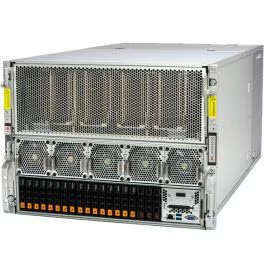
Supermicro 8U GPU SuperServer (SYS-821GE-TNHR)
- GPU count
- 8
- GPU model
- NVIDIA HGX GPU Baseboard 8 H200 141GB
- CPU model
- Dual 5th/4th Gen Intel Xeon Scalable Processors
₹5,12,07,811
Built to order
Supermicro
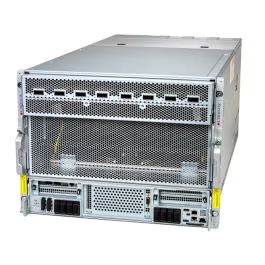
Supermicro 8U GPU SuperServer (SYS-822GS-NB3RT)
- GPU count
- 8
- GPU model
- 8 Onboard NVIDIA HGX B300 GPUs
- CPU model
- Dual Intel Xeon 6700 Series Processors with P-cores
₹9,03,53,780
Built to order
NVIDIA
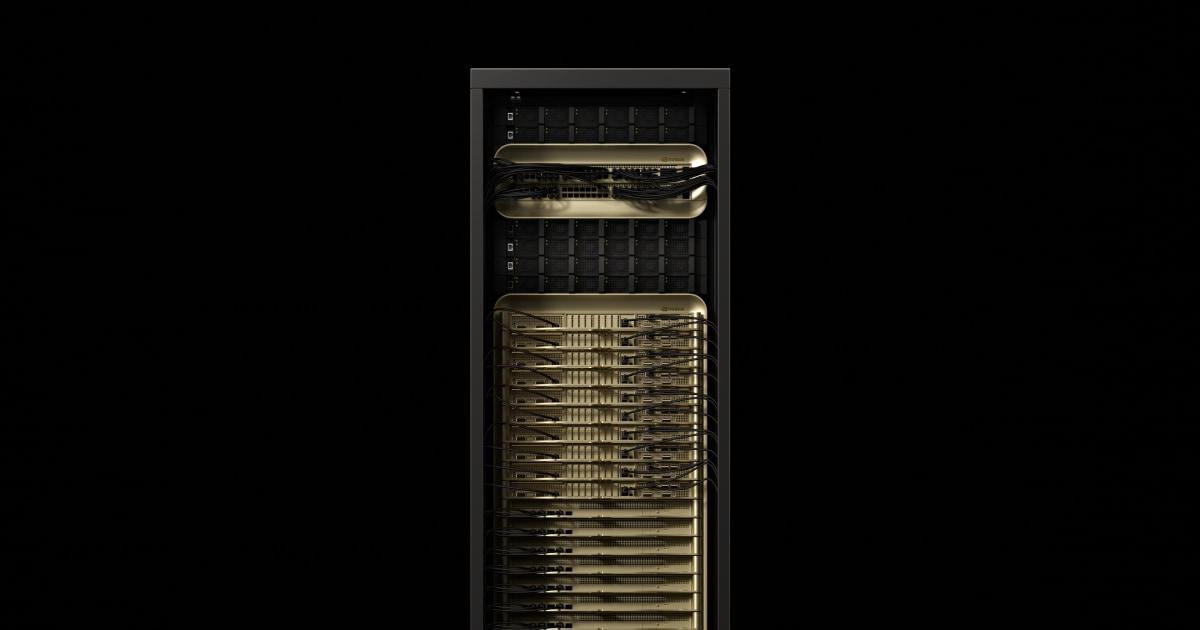
NVIDIA GB300 NVL72 Rack-Scale AI Factory
- GPU count
- 72
- GPU model
- 72 NVIDIA Blackwell Ultra GPUs, 36 NVIDIA Grace CPUs
- Total GPU memory
- 20,000 GB
₹71,86,20,000
Built to order
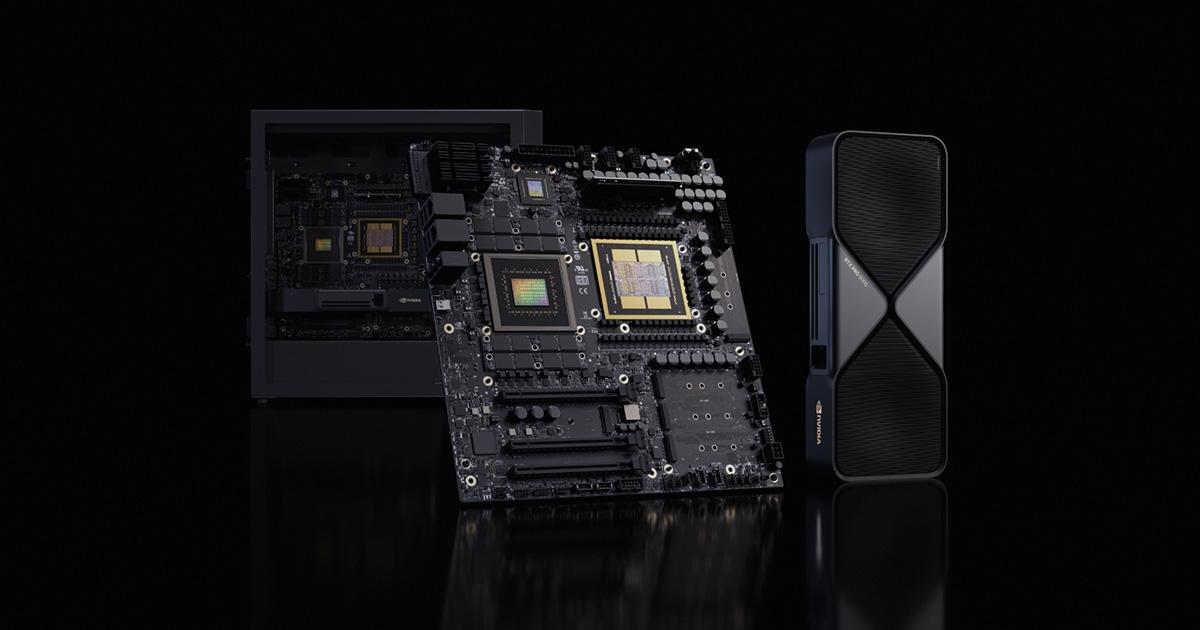
NVIDIA
NVIDIA DGX Station (GB300 Grace Blackwell Ultra)
- GPU count
- 1
- GPU model
- 1x NVIDIA Blackwell Ultra
- Memory per GPU
- 252 GB
₹1,67,47,713
Built to order
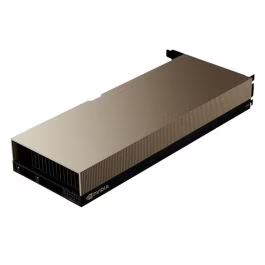
NVIDIA
NVIDIA H100 PCIe 80GB Tensor Core GPU
- GPU model
- NVIDIA H100 (Hopper)
- Memory per GPU
- 80 GB
₹43,60,732
Backorder
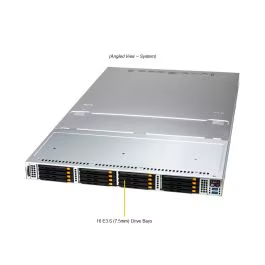
Supermicro
Supermicro 1U SuperStorage Server (SSG-121E-NE316R)
- CPU model
- Dual 5th/4th Generation Intel Xeon Scalable Processor
- Form factor
- 1U / 1 Node
₹19,94,933
Built to order
Supermicro
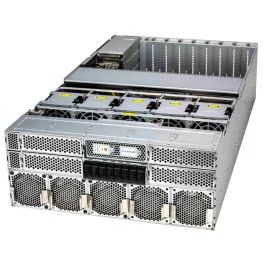
Supermicro 4U GPU SuperServer (SYS-422GL-NR)
- GPU model
- Up to 8 Double-Wide GPUs
- CPU model
- Dual Intel Xeon 6900 Series Processors with P-cores
- Form factor
- 4U Rackmount
₹1,24,93,150
Built to order
Supermicro
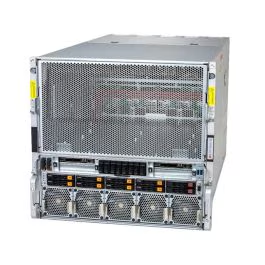
Supermicro 10U GPU SuperServer (AS -A126GS-TNBR)
- GPU count
- 8
- GPU model
- 8 Onboard NVIDIA HGX B200 GPUs
- CPU model
- Dual AMD EPYC 9005/9004 Series Processors
₹7,26,70,572
Built to order
Specifications to compare
- GPU count
- Memory per GPU
- Total GPU memory
- Interconnect
- Network speed
- Max system power