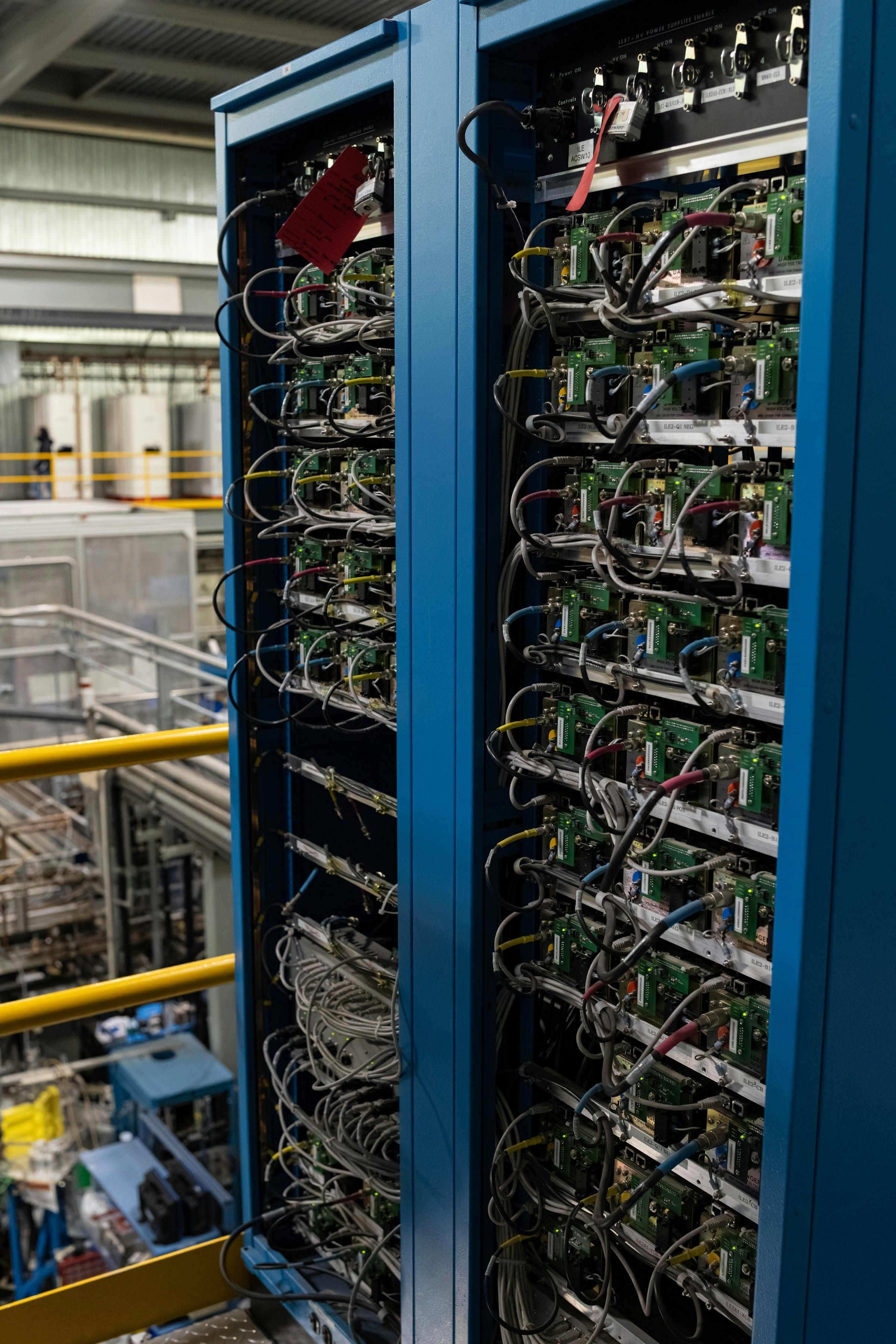
HPC Infrastructure
High-performance computing clusters — compute nodes, low-latency interconnects, parallel file systems and schedulers — for simulation and scientific workloads.
Peak versus delivered performance
Theoretical peak (Rpeak) is cores × clock × floating-point operations per cycle, plus accelerator peak. Delivered performance depends on memory bandwidth, interconnect latency and how much of the code parallelises — Amdahl's law caps the speedup of any job with a serial fraction. The HPC cluster planner reports Rpeak and an estimated sustained figure from an efficiency you set.
Memory bandwidth per core
Many CFD, weather and finite-element codes are memory-bandwidth bound. Populating every memory channel and choosing core counts that keep bandwidth per core healthy often matters more than peak FLOPS.
Interconnect and storage
Tightly coupled MPI jobs need low-latency fabrics; embarrassingly parallel jobs tolerate commodity Ethernet. Parallel file systems are sized for aggregate checkpoint and I/O bandwidth, not just capacity.
10 products
Compare selected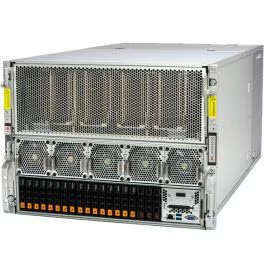
Supermicro
Supermicro 8U GPU SuperServer (SYS-821GE-TNHR)
- GPU count
- 8
- GPU model
- NVIDIA HGX GPU Baseboard 8 H200 141GB
- CPU model
- Dual 5th/4th Gen Intel Xeon Scalable Processors
₹5,12,07,811
Built to order

GIRIVON
Scientific Computing Applications Engineer — simulation & research codes (per day)
₹2,75,000
Built to order

NVIDIA
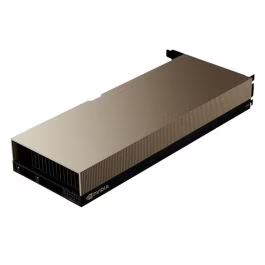
NVIDIA H100 PCIe 80GB Tensor Core GPU
- GPU model
- NVIDIA H100 (Hopper)
- Memory per GPU
- 80 GB
₹43,60,732
Backorder
Supermicro
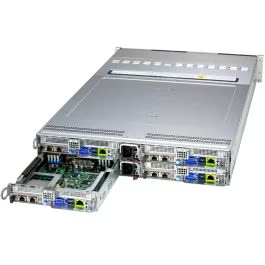
Supermicro 2U BigTwin SuperServer (SYS-222BT-HNR)
- CPU model
- Dual Intel Xeon 6700/6500 Series Processors With P-Cores or 6700 Series Processors with E-Cores
- Form factor
- 2U / 4 Node
₹69,12,014
Built to order
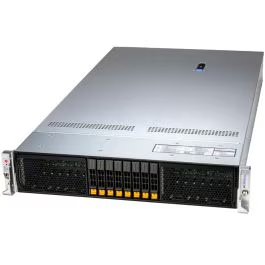
Supermicro
Supermicro 2U Hyper SuperServer (SYS-212HA-TN)
- CPU model
- Single Intel Xeon 6 6900 Series Processor
- Form factor
- 2U / 1 Node
₹44,85,401
Built to order
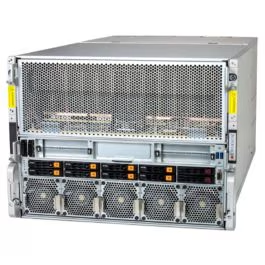
Supermicro
Supermicro 8U GPU SuperServer (AS -8126GS-TNMR)
- GPU count
- 8
- GPU model
- 8 Onboard AMD Instinct MI325X or MI350X OAM Accelerators
- CPU model
- Dual AMD EPYC 9005 Series Processors
₹4,34,14,602
Built to order
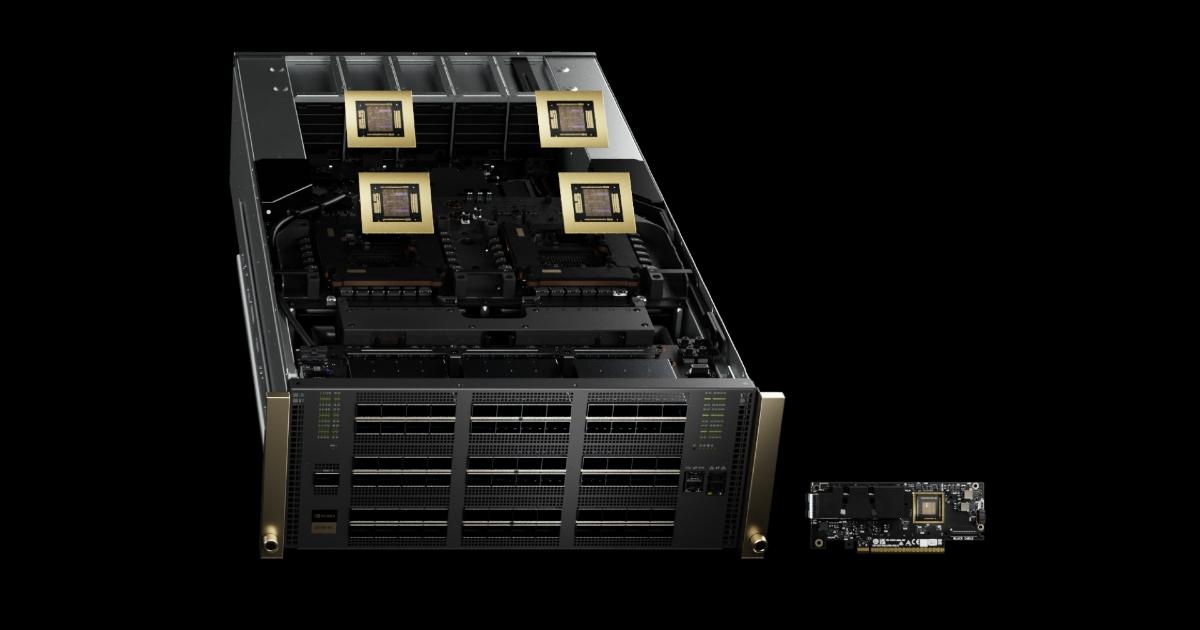
NVIDIA
NVIDIA Quantum-X800 Q3400-RA InfiniBand XDR Switch (144 × 800 Gb/s, 4U)
- Network speed
- 800 Gb/s
₹1,71,10,210
Built to order
Specifications to compare
- CPU cores (total)
- Memory
- GPU count
- Interconnect
- Network speed